
Jeoji Oreum: the forest path once called Dakmol Oreum and the viewpoint at the end of the loop trail
At Jeoji Oreum, the end point of Olle Course 13, you pass from an entrance greeted by citrus trees along a gentle 1.5 km loop trail, then climb stairs to the top. From the viewpoint you can see Hallasan, Sanbangsan and the surrounding oreums, and to the west as far as Biyangdo and Gapado.
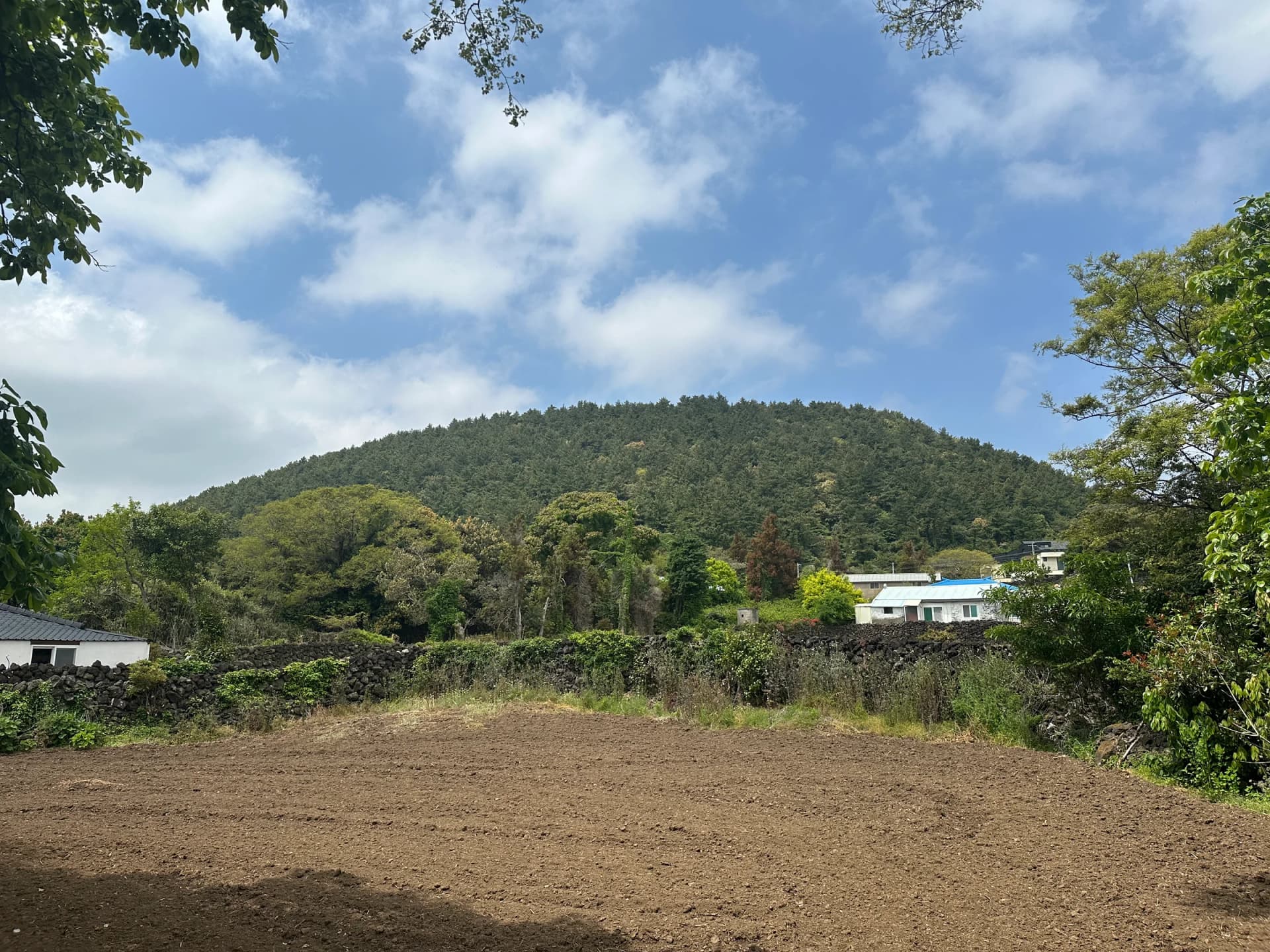
Jeoji Oreum is an oreum in Jeoji-ri, Hangyeong-myeon, Jeju-si. It sits at the end point of Jeju Olle Trail Course 13; in 2005 it was designated a Forest of Life, and in 2007 it received the grand prize (Life Prize) at the 8th National Beautiful Forest Contest. Stand on the viewpoint at the top and you can see Biyangdo and Hallasan together.
At the entrance, citrus trees greet you first. The path starts as a gentle forest trail and climbs to the top by stairs, so it suits a day when you want to enjoy a forest walk and a view in one go.
The name it once had: Dakmol Oreum
Jeoji Oreum used to be called Dakmol Oreum. The old name of Jeoji is said to have been Dakmoru, or Dakmol for short.
Paper mulberry also grows thickly along the way up, so it is fun to walk with the old name in mind. Knowing that this oreum carries the village's old name makes the path look a little different.
Photo: Grapesurgeon / Wikimedia Commons · CC BY-SA 4.0The loop trail and the stairs to the top: distances and times
The loop trail runs as a gentle 1.5 km forest path, and where it ends there are stairs up to the top. It takes about 45 minutes to the top, and the viewpoint at the top is 1.9 km away.
The time it takes depends on the trailhead. From the entrance at the oreum car park to the top takes about 15 minutes; from the entrance on the village hall side, including half a lap of the loop trail, it takes about 40 minutes. Visiting before sunset is recommended.
As you climb the stairs and follow the path, silverberry, wild rose, paper mulberry and more grow thickly. The natural scenery all along the loop trail toward the viewpoint puts the mind at ease.
It is fine to walk only the loop trail and climb to the top another time. The forest path is gentle, so it is easy to set your own pace, and at the foot of the stairs you can decide whether to climb according to how you feel that day.
Mountains and islands to find from the viewpoint at the top
When you reach the viewpoint, you can take in the surrounding peaks at a glance, such as Hallasan, Sanbangsan, Songaksan, Isidol Oreum, Geumak Oreum and Dangsanbong. To the west you can see as far as Biyangdo and Gapado.
On a clear day, turn a little at a time and find them one by one. If you take photos, move a few steps at a time and record the view all the way round, and later it is easy to match the mountains and islands to their names again.
 Photo: Grapesurgeon / Wikimedia Commons · CC BY-SA 4.0
What to check before you go
Many oreums have addresses registered as mountain land, so navigation may not find the exact location, and many have no separate car park. Some oreums are private land where access is restricted or controlled. Before you set out, check accurate information with an information desk such as the Jeju Tourist Information Center.
On the day you go to Jeoji Oreum, plan your time so you can come down before the sun sets, and bring a bottle of water and a light jacket. On the stairs it is safer to shorten your stride and walk slowly on the way down.
For those walking Olle Course 13 it is the oreum met at the end of the trail, and for those coming by car it is a place to get a short forest walk and a view together. Remembering the old name as well makes the link between the village and the oreum feel a little closer.
The loop trail has no steep climbs, so it is pleasant to walk while feeling the shade of the forest. The stairs to the top are steeper than the loop trail, so catch your breath once at the foot of the stairs before you climb.
Knowing the names of the mountains and oreums visible from the viewpoint before you go makes finding them more fun. Start with the easy ones to spot, such as Hallasan and Sanbangsan, then pick out Isidol Oreum, Geumak Oreum and Dangsanbong between them one by one. Biyangdo and Gapado on the western sea are clearer on fine days.
There are two trailheads, so deciding in advance which entrance to use keeps you from wandering. For a short climb choose the entrance on the oreum car park side, and to walk the loop trail as well choose the entrance on the village hall side.
The path thick with silverberry, wild rose and paper mulberry keeps catching your eye on the way up. Walking while recalling the trees' names one by one makes even a short forest path feel more relaxed.
After the forest path, a meal in Aewol
If you come down from Jeoji Oreum and head toward Aewol, consider adding Mipojip Jeju Aewol to your list of places to eat. Check the travel time and traffic on a map before you set off.
If you want to satisfy the hunger of a day climbing up and down the forest path and stairs, take a look at the menu of Mipojip, which serves haemuljang (soy-cured seafood) and sotbap (pot rice). Talking over the mountains and islands you found from the viewpoint during the meal would make for a nice time as well.
- Jeoji Oreum
- Dakmol Oreum
- Jeoji-ri
- Hangyeong-myeon forest trail
- Jeju Olle Course 13
- Mipojip
Read next
 Aewol, Jeju
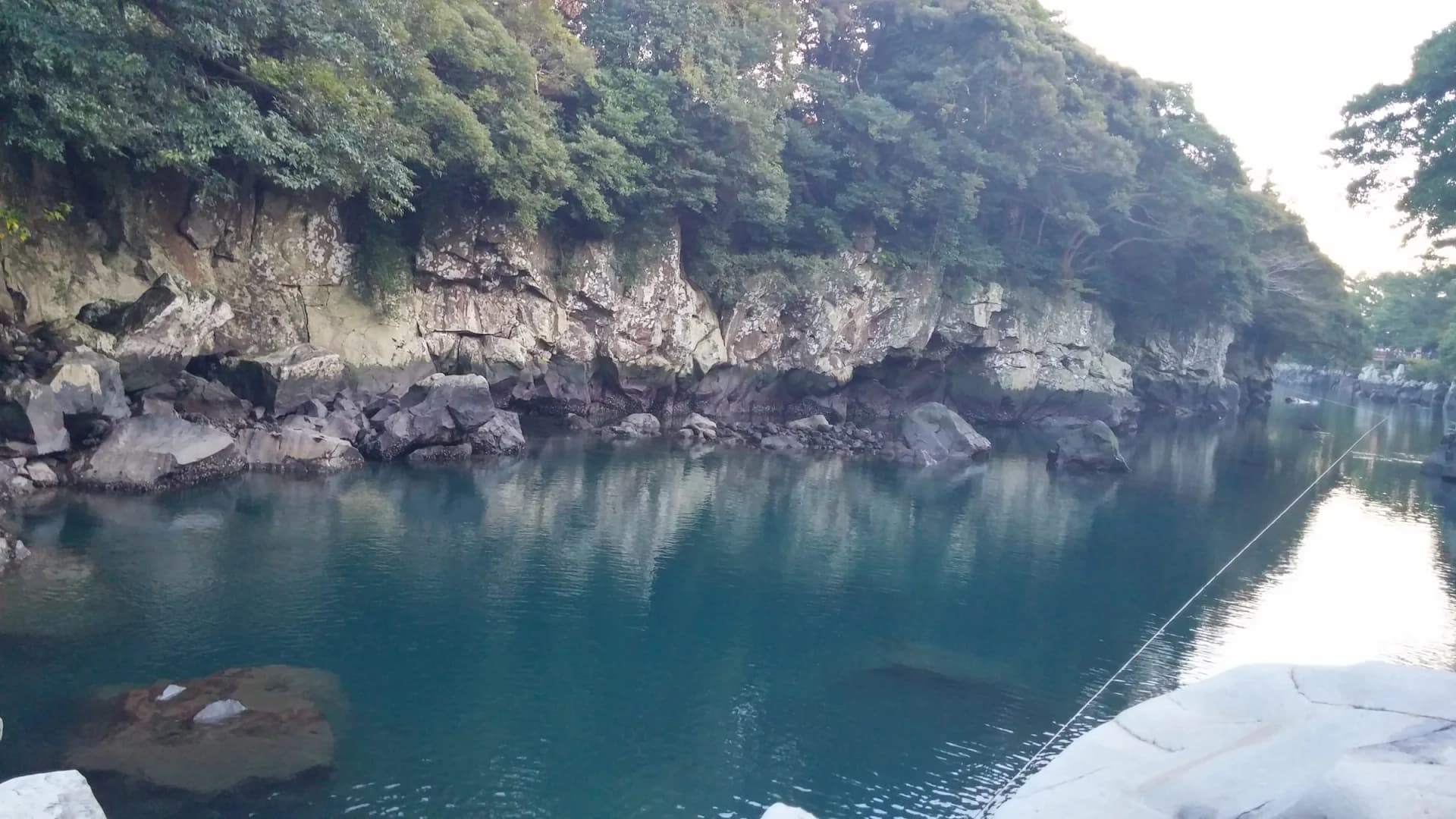
Soesokkak: the blue pool at the end of Hyodoncheon Stream, and news of the 2026 Jeju Citrus Expo
Walk the waterside of a deep pool formed where the fresh water of Hyodoncheon Stream meets the sea, ringed by strange rocks like a folding screen, and go down to a black-sand beach. In Seogwipo, the Jeju Citrus Expo runs from 19 to 23 November 2026.
 Aewol, Jeju
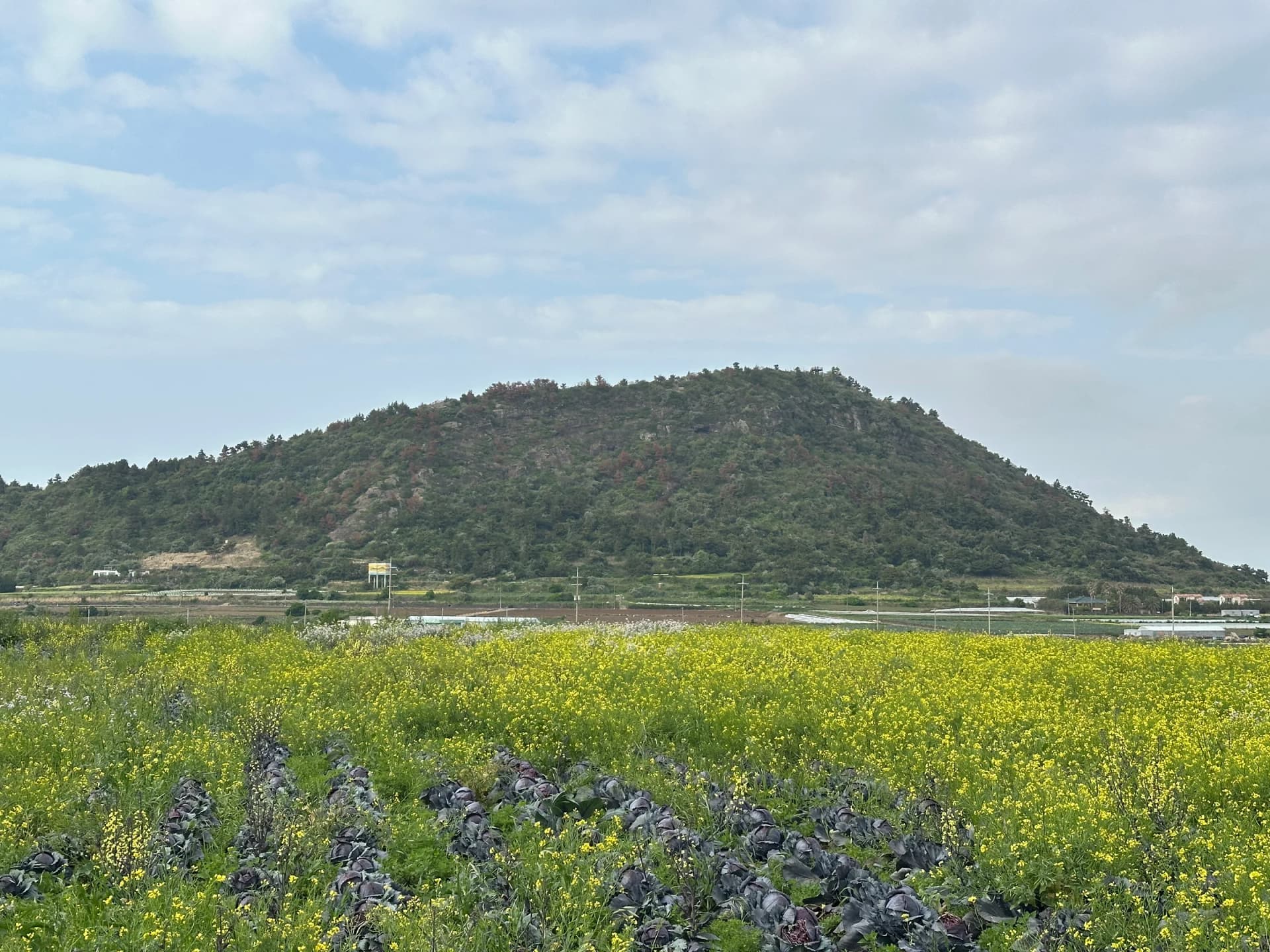
Dangsanbong: a hydrovolcano at the end of Olle Course 12 and the Turtle Rock viewpoint
Dangsanbong in Yongsu-ri, Hangyeong-myeon, is a hydrovolcano formed by an explosive reaction between water and magma, and a World Geopark site. Choose the 15-minute A course or the 40-minute B course, and from the viewpoint just below the top look down on the coast running north and south.
 Aewol, Jeju
Southernmost Yellowtail Festival 2026: four days at Moseulpo Port from 19 November
The 26th Southernmost Yellowtail Festival runs for four days, from 19 to 22 November 2026, around Moseulpo Port in Daejeong-eup, Seogwipo. The opening ceremony is on the evening of the 19th and the closing ceremony on the evening of the 22nd, and boats to Marado and Gapado leave not from the festival ground but from Unjin Port (Moseulpo South Port).