
Yongduam: a short walk by the sea near Jeju Airport to meet the dragon-head rock and its legend
Yongduam, on the coast northeast of Jeju International Airport, is a volcanic rock shaped like a dragon rising from the sea. Its head shows best from the western viewing point; viewing is free, and a free cultural tour guide programme runs here too.
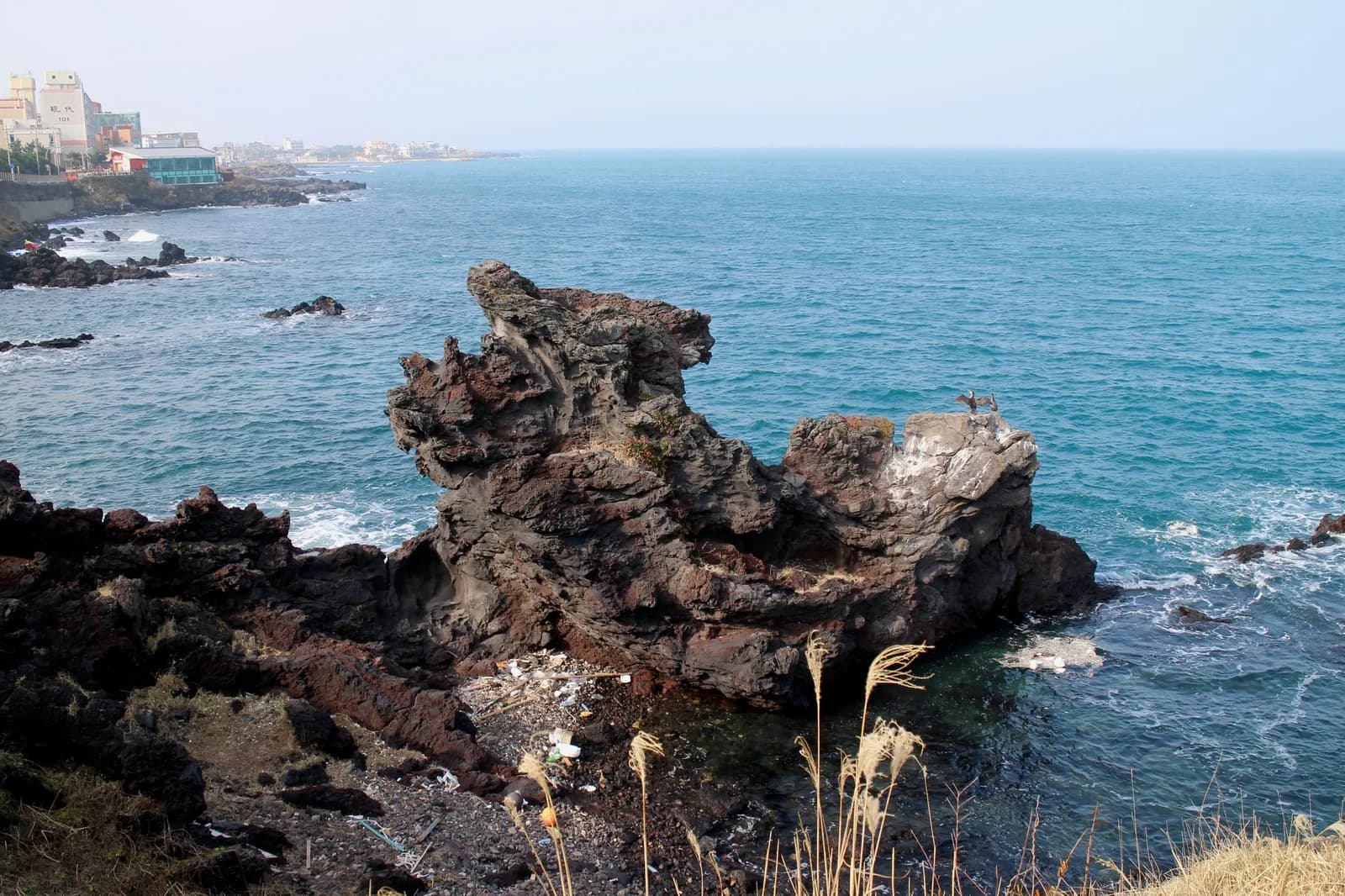
If you have just arrived in Jeju, or want to see the sea in the short time before you leave, think of the coast of Yongdam 2-dong in Jeju-si. Yongduam (Dragon Head Rock), on the coast northeast of Jeju International Airport, is one of Jeju's signature coastal sights. Because it is close to the airport, overseas travellers and tour groups often visit too.
Viewing is free, and it is always open, all year round. You don't need to clear a long stretch of your schedule to stop here, so it fits well at the start or end of a trip.
A dragon's head rising from the sea
The rock was named for its shape, like a dragon roaring as it surges up out of the sea. It is volcanic rock eroded by waves and wind over a long time, and the part above the water is said to be about 10 m high.
Where you stand matters when you look at the rock. Seen from the western viewing point, the shape of the dragon's head shows relatively clearly. If the shape is hard to make out from where you first arrive, move to the western viewing point and look again.
Photo: 안범진 / Wikimedia Commons · CC BY-SA 4.0The view on a day of waves, and safety
On days when the waves are breaking, you can see a dramatic scene of rock and waves together. Check the weather, though, and always watch from inside the viewing path and safety facilities. Even if you want to get closer to the rock for a photo, don't step off the viewing path.
If you plan to stay by the sea for a while, a light jacket will make things much more comfortable on a windy day.
The legend of the imugi that could not ascend
According to legend, a dragon that lived in nearby Yongyeon turned to stone as it tried to ascend to the sky. The rock also carries the story of an imugi, a serpent that longed to become a dragon. Deep in the sea off Yongdam-dong lived an imugi that wanted to become a dragon, and it is said that the years it had to endure to become one numbered a thousand.
At last, on the day of its ascent, the imugi raised its blue scales, long whiskers and sharp claws and rose powerfully toward the sky, but it was struck by an arrow shot by the god of Hallasan and fell back into the sea. Bitter that the wish it had held for so long had come to nothing, the dragon raised its head above the sea, roared, and turned to rock, the story goes.
That is why, it is said, it still looks as if it is howling with its mouth wide open and gazing at the sky, and why the sea here holds its breath, as if it knows the dragon's sorrow. Stand at the western viewing point with the story in mind, and the rock's mouth and head stand out more clearly.
The two stories differ a little, but they share the same thread: a creature that long hoped to rise to the sky ended up as rock. Standing in front of it and talking with your companions about which story stays with you is another way to enjoy this place.
 Photo: Korea.net / Korean Culture and Information Service / Wikimedia Commons · CC BY-SA 2.0
Stories from the free cultural tour guide programme
A free cultural tour guide programme for visitors runs here. Through the commentary you can hear about how the rock formed, where its name comes from and the sights around it. The commentary runs in set sessions and does not run on the day of Seollal or Chuseok. If you arrive in time for the start of a session you can hear it without waiting, so check the times before you visit.
You can book by phone in advance or sign up on site, but guide assignments and hours may change, so check with the Yongduam tourist information centre before you visit.
Parking and a coastal drive
Parking is available, but the parking fee has to be checked on site. The address is 15 Yongduam-gil, Jeju-si, Jeju Special Self-Governing Province.
The Yongdam–Dodu Coastal Road, which runs from Yongduam to Dodu Port, has a range of cafés and restaurants, so you can enjoy a drive with the sea in view. After seeing the rock, drive slowly along the coast and take in the sea once more.
 Photo: Martin Chen / Wikimedia Commons · CC BY 2.0
An order for a short stop
If you are short on time, decide on an order. First find the dragon's head from the western viewing point, then listen to the commentary if a session fits, and then move on along the coastal road; that order works without strain. On days of high waves, it is safer to look briefly from inside the viewing path and move on.
On the way to the airport, a meal in Aewol
If you are eating on the Aewol side on a day you travel to or from the airport, consider adding Mipojip Jeju Aewol to your list. Check the travel time between the airport and Aewol on a map, along with the traffic, before you set off.
If you want a hearty first or last meal in Jeju, take a look at the menu of Mipojip, which serves haemuljang (soy-cured seafood) and sotbap (pot rice). Sharing the story of the dragon's head you saw by the sea over the meal would make for a nice time as well.
- Yongduam
- Near Jeju Airport
- Yongdam coast
- Yongdam-Dodu Coastal Road
- Jeju legend
- Jeju City sea
- Mipojip
Read next
 Aewol, Jeju
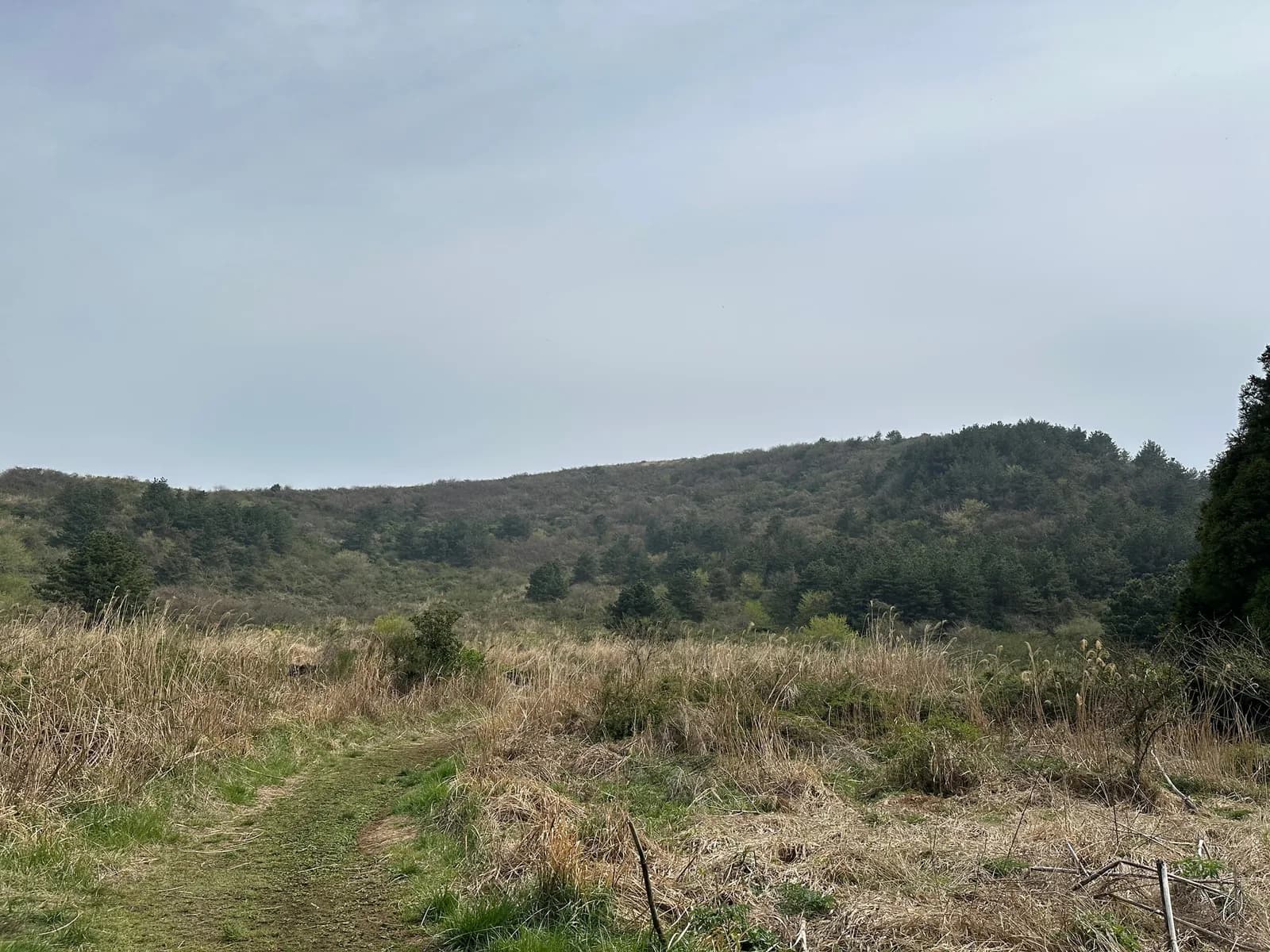
Jeongmul Oreum: a walk on an oreum named after a spring, looking out over Isidol Ranch and the sunset
Jeongmul Oreum, in Geumak-ri, Hallim-eup, takes its name from Jeongmul Spring in front of it. Walk it clockwise, starting up the left path, and you climb facing Hallasan and come down facing the sea; from the top you can see neighbouring oreums and Isidol Ranch.
 Aewol, Jeju
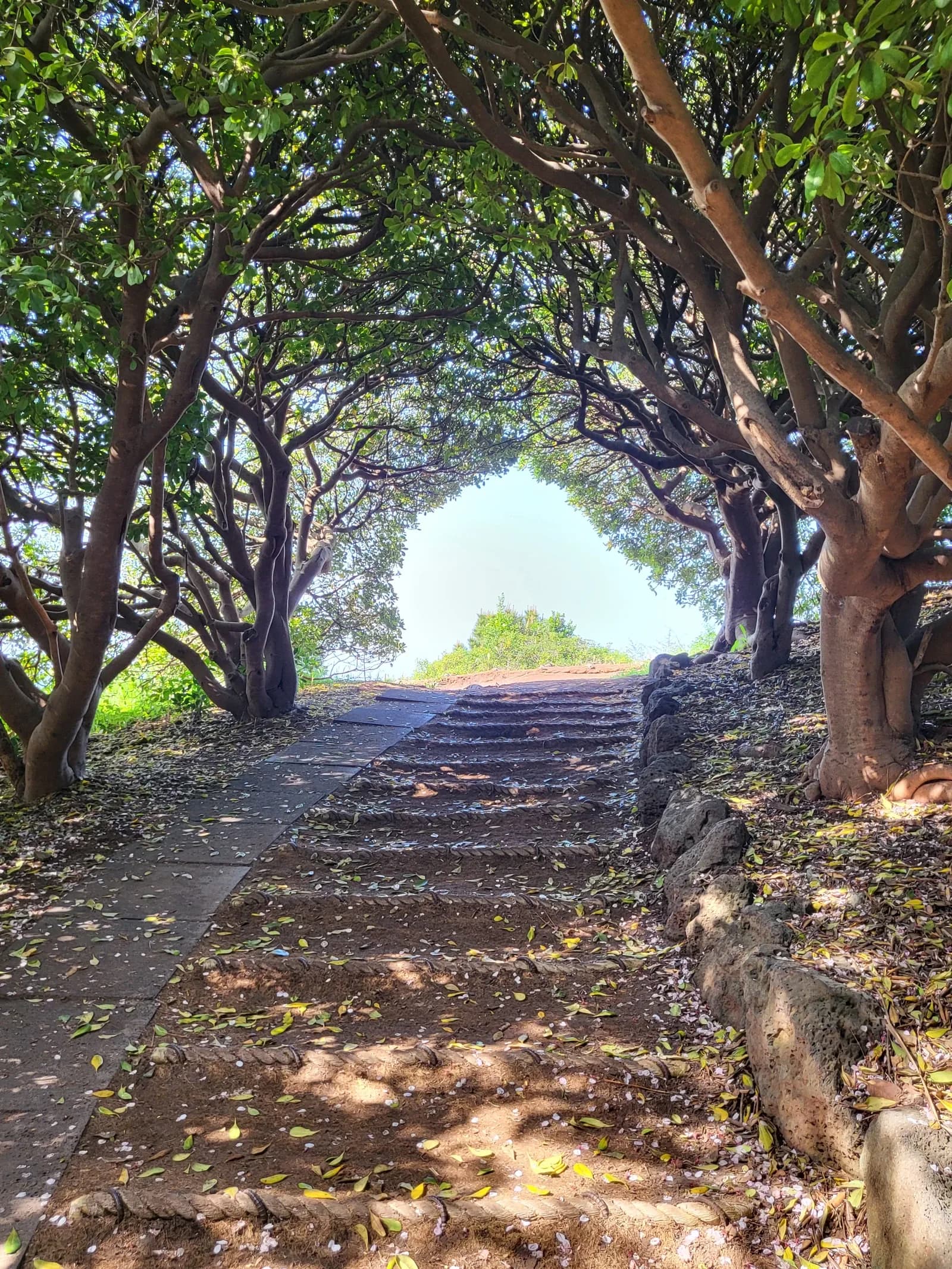
Dodubong: a low volcanic cone right next to Jeju Airport where you can watch planes and the sea together
Dodubong is a low oreum (volcanic cone) in Jeju City, right next to Jeju Airport. Its gentle slope makes it easy to climb, and from the path up and the summit you can watch planes taking off and landing together with the sea.
 Aewol, Jeju
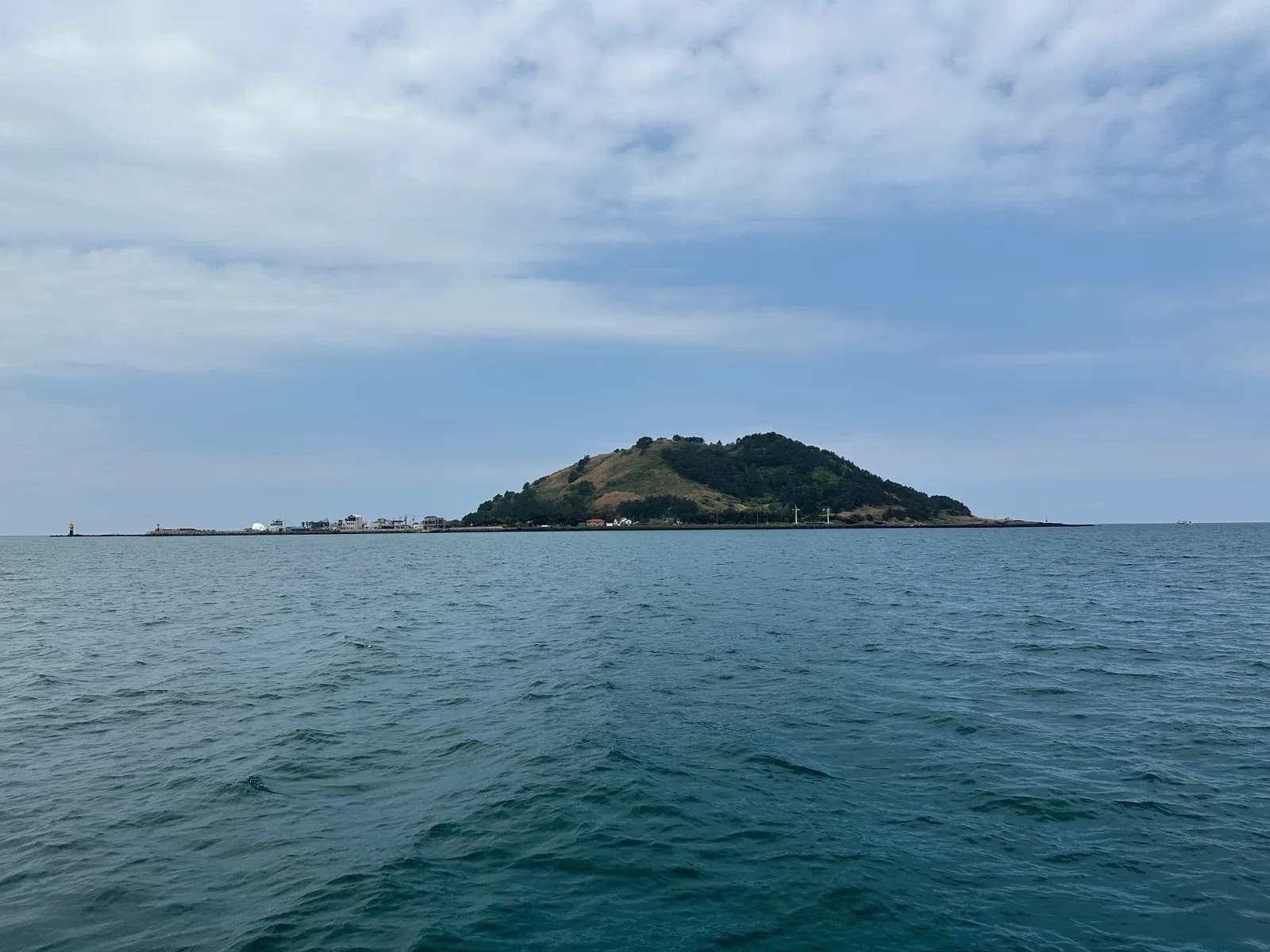
Biyangdo Island: the small island off Hyeopjae, about 15 minutes by boat from Hallim Port
Biyangdo, the island you can see off Hyeopjae Beach, is a small island reached in about 15 minutes by boat from Hallim Port. Even if you climb Biyangbong to see the white lighthouse and walk around the island, 2 to 3 hours is enough to look around.