
Nabeup Geumsan Park, an Evergreen Forest Left Beside the Village in Jeju
A dense evergreen forest at 1457-1 Nabeup-ri, Aewol-eup, Jeju-si. A sample area that preserves the original form of a natural forest, where evergreen trees and some 60 species of warm-temperate plants grow; the location of a forest protected as a Natural Monument, and what to observe there.
What kind of forest it is
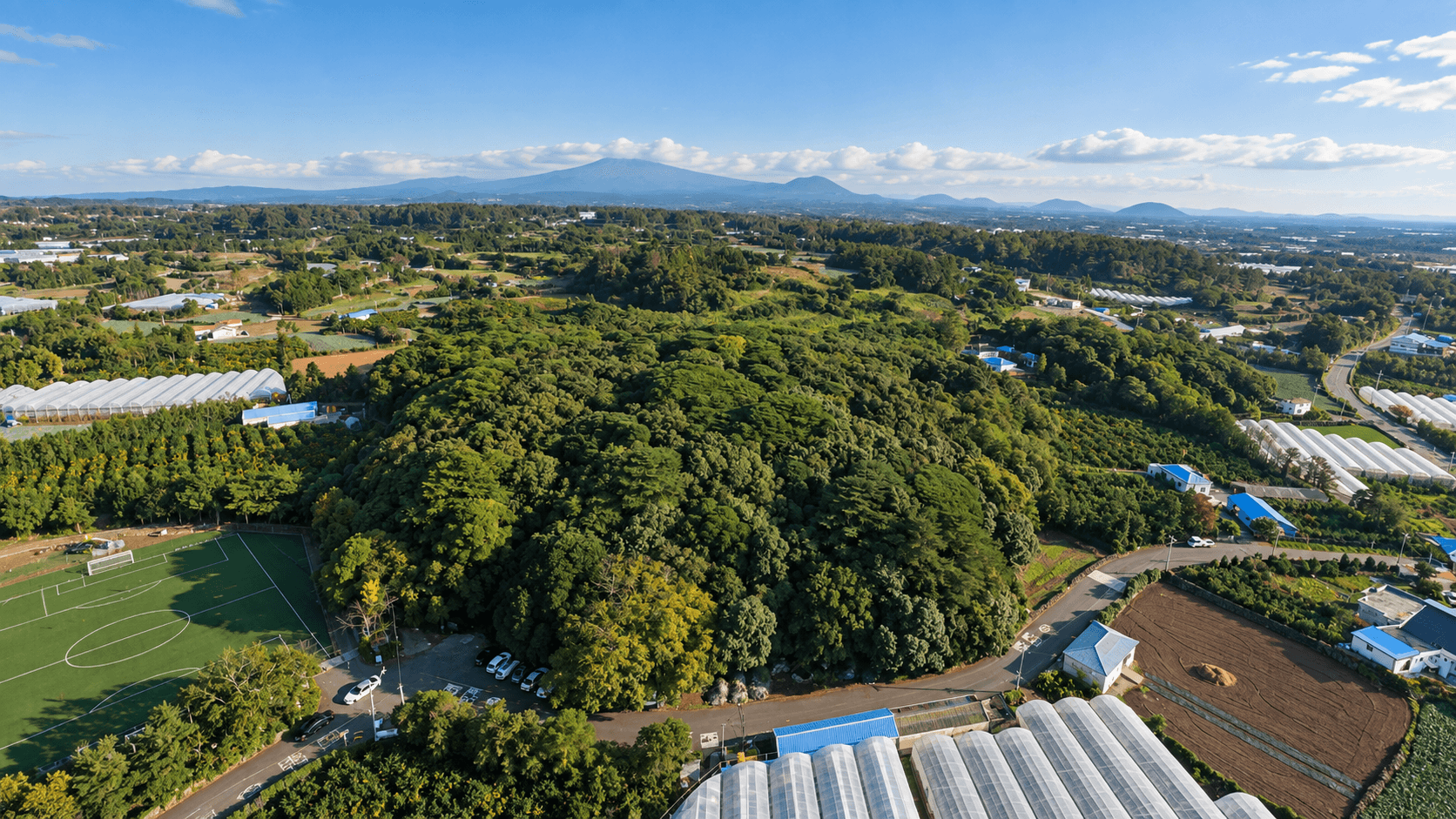
Geumsan Park is an evergreen forest in Nabeup-ri, Aewol-eup, Jeju-si. It is the same place also called the Nabeup Warm-Temperate Forest. The name includes the word park, but in character it is closer to a forest.
Trees stand thick over a wide area next to the village of Nabeup-ri. It is not deep in the mountains far from the village; the forest sits right beside where people live, and that is the first thing that comes up when this place is described.
Where it is
The address is 1457-1 Nabeup-ri, Aewol-eup, Jeju-si, Jeju Special Self-Governing Province. It is within Aewol-eup, so it is well placed to consider alongside a route around the Aewol area.
When finding your way, use this address as the reference point. Since the forest adjoins the village, the boundary between the village roads and the forest is not far off.
What grows there
Evergreen trees grow inside the forest. Along with them, some 60 species of warm-temperate plants grow there.
Because the number of species is not small, it is less a forest where you look at a single tree and more a forest where different plants fill it in layers together. Trees that keep their leaves all year round are at the center, so the inner parts of the forest are deep in shade.
A forest in layers
Evergreen trees fill the upper part, and beneath them several species of warm-temperate plants have taken their places. With the species counted at around 60, it is hard to match names one by one while walking through once.
That the makeup of the forest cannot be summed up by one kind of tree can be guessed from the species count alone. Within the single name evergreen forest, different plants are held together.
What 'a sample area preserving the original form' means
Geumsan Park is a sample area that preserves the original form of a natural forest. It means this is not a forest newly created by human hands, but a forest that was already there and has remained as it was.
For that reason the scenery here is preserved in a primeval state. Rather than picturing a tidy strolling garden, it is closer to understanding this place if you enter thinking of it as a forest left untouched.
Different in character from park facilities
The character of a natural forest preserved in its original form sets it apart from a park arranged around facilities. If you go expecting newly planted, shaped trees or sections divided by landscaping, what meets your eye may be different.
The state in which evergreen trees and warm-temperate plants have taken their places, and the fact that this state remains as primeval scenery, is what this forest holds.
Why it is protected as a Natural Monument
This forest is designated and protected as a Natural Monument. It is a case where the whole forest became the object of protection because of the value a natural forest in its original form holds.
The term protected forest applies to visitors as well. A person going to see the forest is both the one looking on and a part of the conditions that let the forest remain as it is now.
A Natural Monument designated beside a village
That a forest designated as a Natural Monument adjoins a village is worth placing alongside the location of this forest. It is a structure where a protected natural forest and the place where people live share a boundary.
So a visit to Nabeup-ri and a visit to the forest meet in one place. Rather than seeing the forest set apart, it is a spot where you come to see it together with the village.
What you must not do in the forest
Breaking branches of the trees, gathering plants, and catching wild animals are all prohibited. These are prohibited without exception, so it is better to know beforehand when you go in.
The rule is not to touch, even if fruit or leaves catch your eye. If you are walking with children, going over these three points before entering the forest is enough.
There are no closing days
Geumsan Park is open year-round. It is not a place where you have to rework your plans around the day of the week.
Still, for things that change with conditions on site, such as amenities or parking, checking once before you set out makes for an easier mind. Inside the forest, dirt paths and shade continue, so comfortable walking shoes are the safe choice.
The same rules whenever you go
Having no separate closing days means you can choose when to go in. Conversely, the three prohibited items do not change with the day of the week or the season.
The day you visit may change, but the line to keep inside the forest stays the same.
Connecting with other neighborhoods in Aewol-eup
Nabeup-ri, where Geumsan Park is, and Gamundong, where Mipojip Jeju Aewol is, are both within Aewol-eup. Our address is 80 Gamundong-gil, Aewol-eup, Jeju-si, Jeju-do, or 제주 제주시 애월읍 하귀2리 2812-1 by lot number.
If you are curious about the coastal side, you may also like reading about the Gueom-ri Stone Salt Field and the Handam Coastal Walk. Our menu and directions are set out on their own pages.
- Geumsan Park
- Nabeup Warm-Temperate Forest
- Aewol-eup
- Jeju forest
- Natural Monument
- Aewol travel
Read next
 Aewol, Jeju
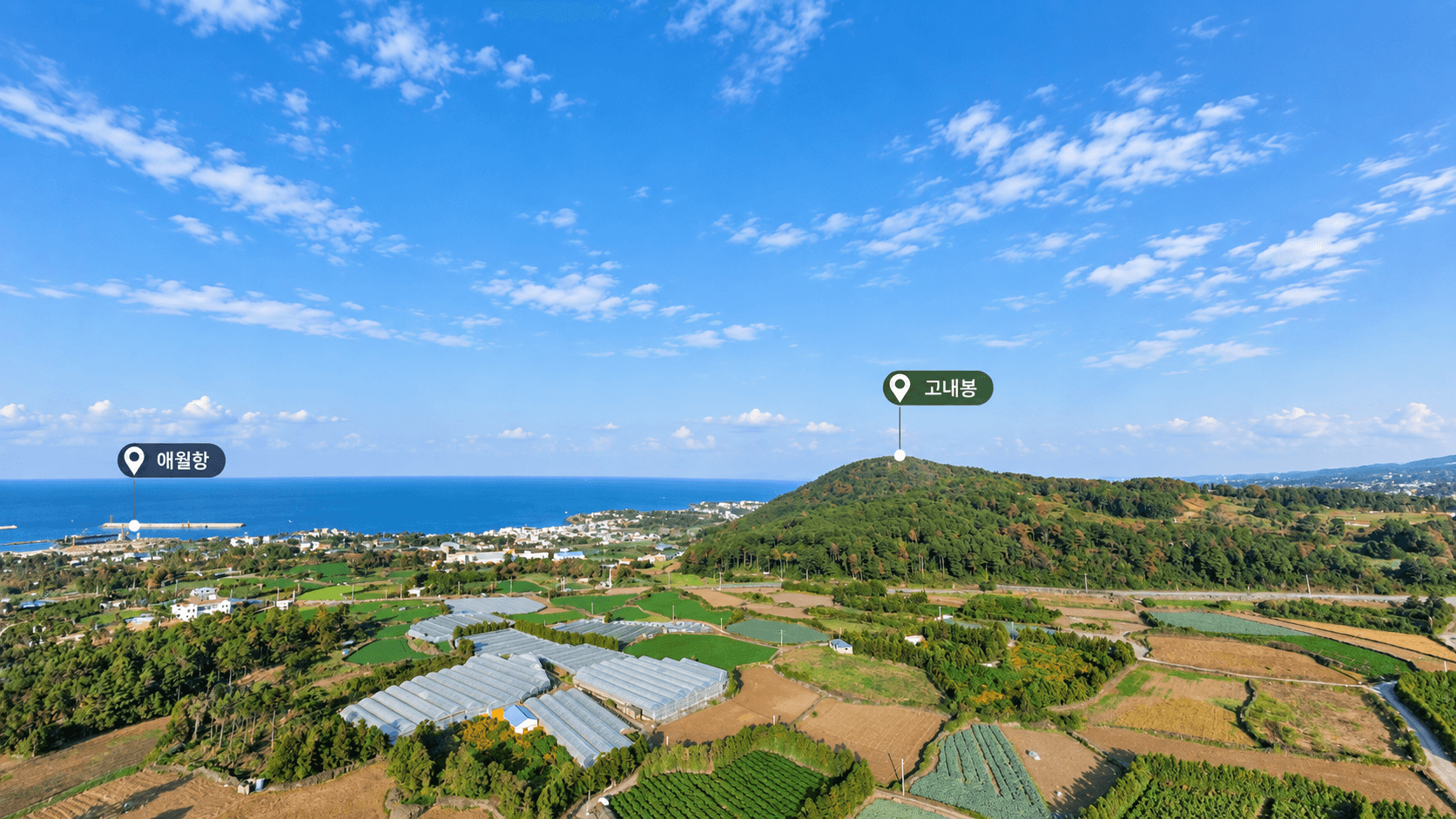
Gonaebong, a Low Oreum in Gonaeri, Aewol, Where Beacon Fires Were Once Lit
An oreum 135m high in Gonaeri, Aewol-eup, Jeju-si. It is made up of five peaks — Mangoreum, Bangaeoreum, Jinoreum, Neobunoreum and Sangdwitoreum — and the summit has an observation deck and exercise facilities. A place where beacon fires were once lit.
 Aewol, Jeju
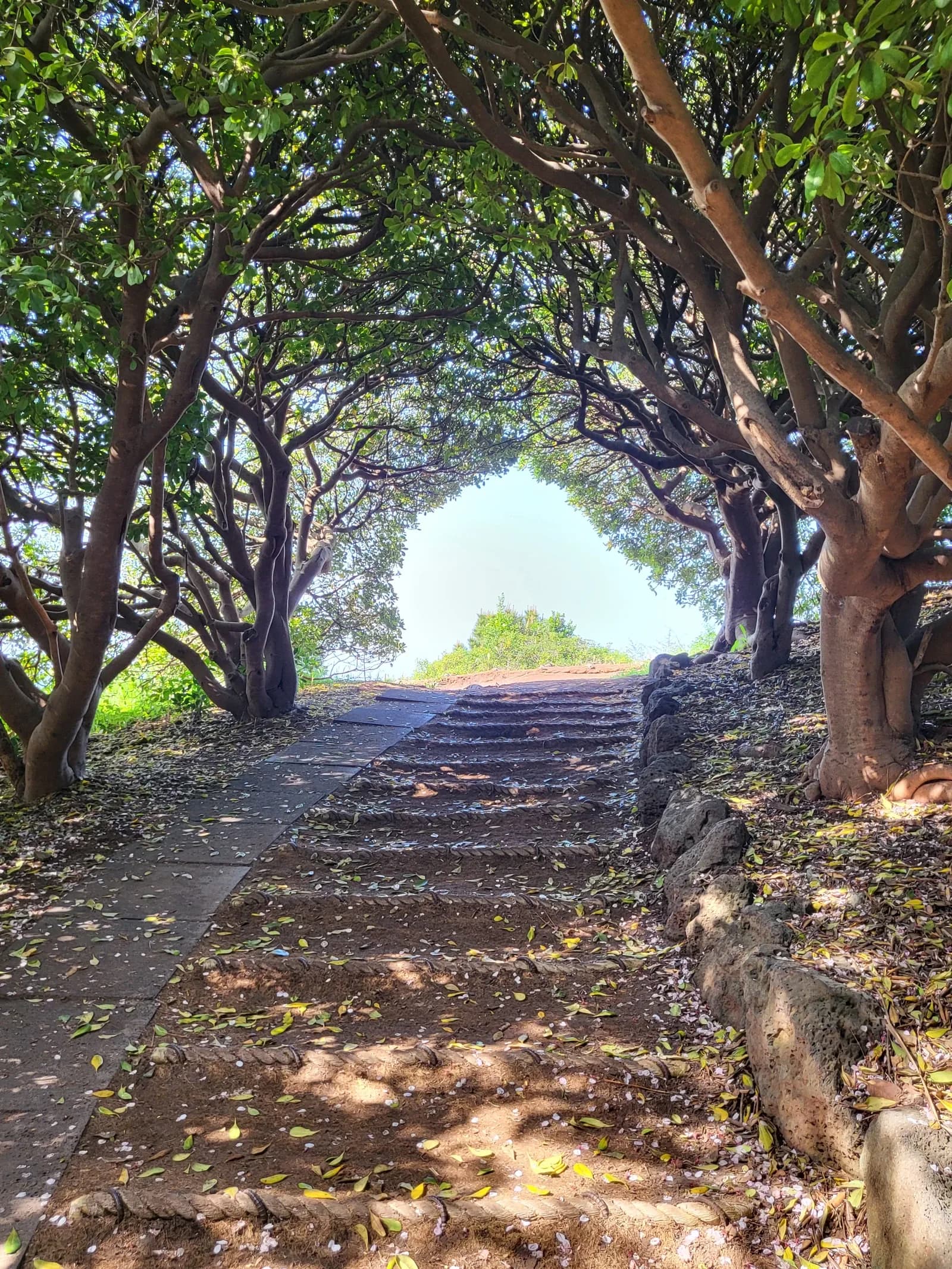
Dodubong: a low volcanic cone right next to Jeju Airport where you can watch planes and the sea together
Dodubong is a low oreum (volcanic cone) in Jeju City, right next to Jeju Airport. Its gentle slope makes it easy to climb, and from the path up and the summit you can watch planes taking off and landing together with the sea.
 Aewol, Jeju
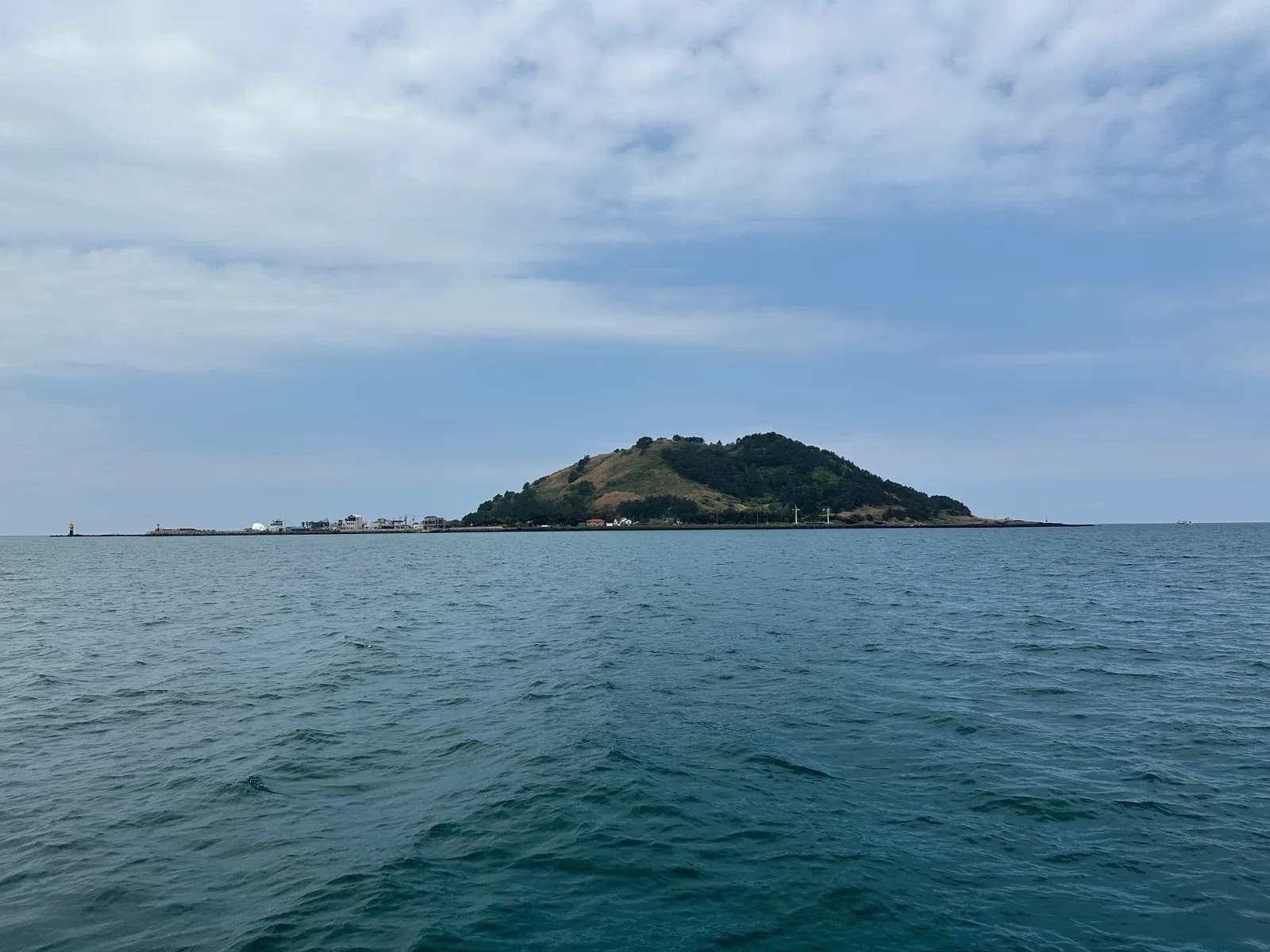
Biyangdo Island: the small island off Hyeopjae, about 15 minutes by boat from Hallim Port
Biyangdo, the island you can see off Hyeopjae Beach, is a small island reached in about 15 minutes by boat from Hallim Port. Even if you climb Biyangbong to see the white lighthouse and walk around the island, 2 to 3 hours is enough to look around.