
Aewol Coastal Road, Following the Sea from Hagwi to Aewol
Running about 9 km from Hagwi-ri to Aewol-ri, the Aewol Coastal Road can be driven, cycled, or walked. It follows a stretch that overlaps with Jeju Olle Trail Course 16 and passes coastal spots such as the Gueom-ri stone salt field and Gueom Port.
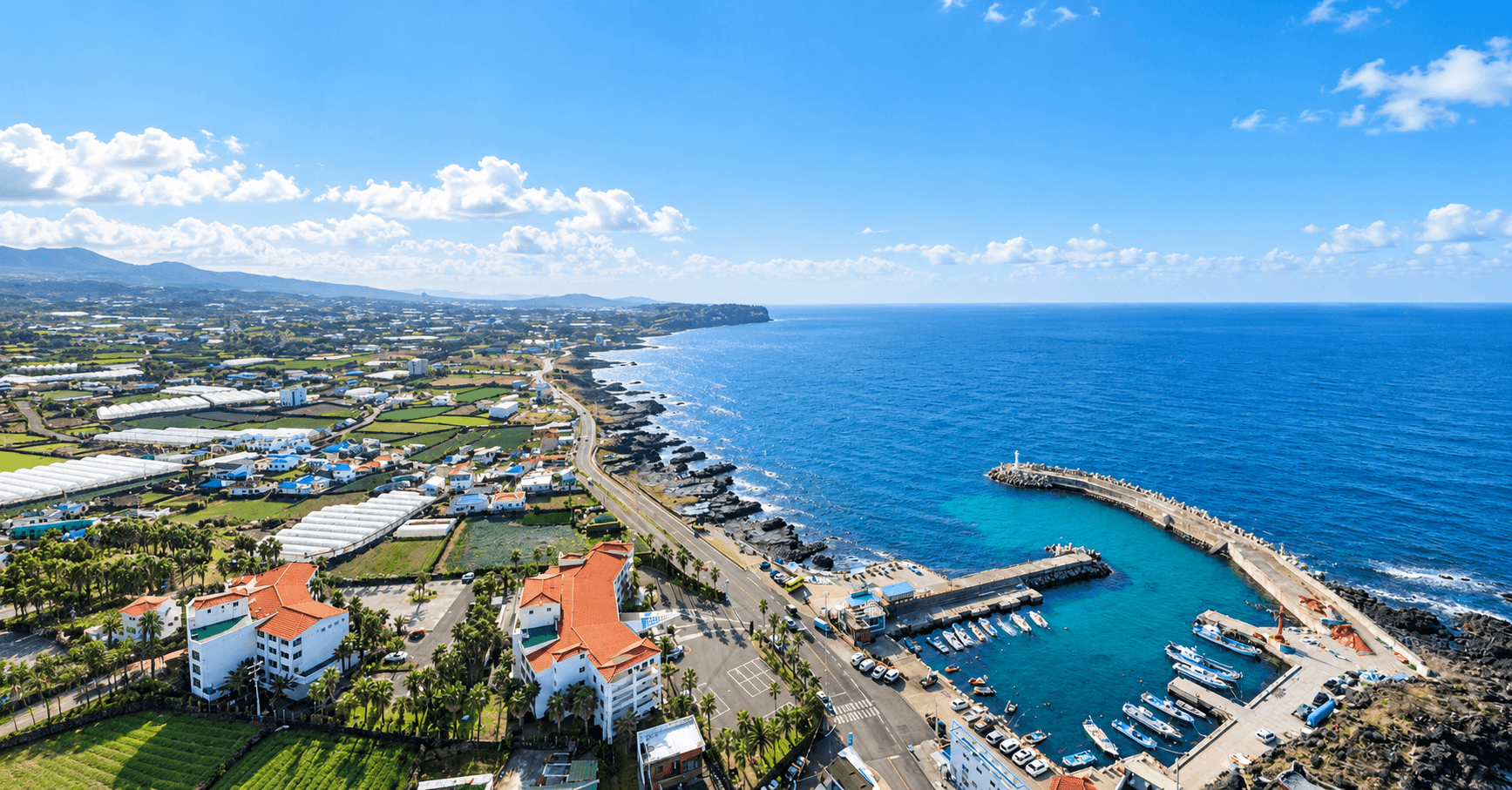
The Aewol Coastal Road is a coastal road that follows the northwestern shoreline of Jeju for about 9 km, from Hagwi-ri to Aewol-ri. It is a driving route, and because a bike path and walking sections run alongside it, you can also travel it by bicycle or on foot. Coastal spots such as the Gueom-ri stone salt field, Gueom Port, the Sineom-ri breakwater, and Gonae Port line the way.
From Hagwi-ri to Aewol-ri, about 9 km
The road runs from Hagwi-ri to Aewol-ri and is about 9 km long. Its road-name address is Aewolhaean-ro, Aewol-eup, Jeju-si. It is a coastal drive with the Jeju sea on one side.
Not a road for cars only
A bike path and walking sections are laid out along the road, so besides driving, you can travel it by bicycle or on a walk. It is also a section that the Jeju Fantasy Bike Path passes through. Part of Jeju Olle Trail Course 16, the 'Gonae–Gwangnyeong Olle', which passes through sea, village lanes, and forest paths, overlaps with this road as well.
So the same road is traveled in different ways. By car, the roughly 9 km runs through in one go; on foot, you pick a coastal stretch where Olle Course 16 overlaps, or a section named as a walking path. People passing with the windows down, people following the shoreline by bicycle, and people walking just one section all look at the same sea. There are many restaurants, cafés, and places to stay around the Aewol Coastal Road, so there are several places to stop and rest along the way.
Coastal spots along the road
Along the road are coastal spots such as 'Sogeumbille', the Gueom-ri stone salt field, Gueom Port, the Sineom-ri breakwater, and Gonae Port. The names may sound scattered, but all of them are part of the coastal scenery that continues along the Aewol Coastal Road.
Gueom Port is a port in Gueom-ri, Aewol-eup. Past the port of Gueom-ri comes the stone salt field, whose road-name address is Aewolhaean-ro 708, which places it right on this coastal road. The basalt shelf lying broadly across the shore by the port is the stone salt field, also called 'Sogeumbille', a place where seawater was held inside banks and made into salt by the sun. For more on what the stone salt field was and how the salt was made, see The story of the Gueom-ri stone salt field.
On one side of the port stands a stone dodaebul. It is an old lighthouse that was lit to guide fishermen returning from night fishing.
If you want to see it on foot
Jeju Olle Trail Course 16 starts at Gonae Port, follows the coastal path, then turns inland toward Hallasan and continues 15.7 km to the Gwangnyeong 1-ri community office. It includes a section that walks along Aewol's coastal road, and the 'Haeandanae' coastal cliff walk in Sineom-ri is part of this course too. After passing the sea at Gueom-ri, it heads inland and passes Susanbong, where there is a gomsol black pine, and the Hangpaduri Anti-Mongolian Historic Site, where the Sambyeolcho of the Goryeo period resisted the Mongols to the end.
Stamps can be collected at the start and end points, and at Hangpaduri in the middle of the course. At Hangpaduri there is a cosmos pavilion, with cosmos flowers blooming around it in autumn. Olle courses are often detoured or changed, so it helps to check the current route with the Jeju Olle information before setting out.
Besides Olle Course 16, there is a coastal trail called the 'Eomjang Coastal Trail' running from Gueom-ri to Gonae-ri. If you are curious about another walk along the Aewol sea, see Walking from the Handam Coastal Walk to Gwakji Gwamul Beach as well.
When the sun sets
Following the winding Aewolhaean-ro, you can see the sunset. The time of sunset changes with the season, so if you plan to time your trip to it, it is better to check once before you set out.
The Aewol Coastal Road at a glance
- Section: from Hagwi-ri to Aewol-ri, about 9 km (road name Aewolhaean-ro)
- Ways to travel it: car, bicycle, walking — a bike path and walking sections are in place, and the Jeju Fantasy Bike Path passes through
- Walking paths: part of Jeju Olle Trail Course 16, the Sineom-ri Haeandanae coastal cliff walk, and the Eomjang Coastal Trail from Gueom-ri to Gonae-ri
- Coastal spots: the Gueom-ri stone salt field (Sogeumbille), Gueom Port and its dodaebul, the Sineom-ri breakwater, Gonae Port
- To see: the sunset along the winding shoreline
The Hagwi end, where the road begins
Mipojip Jeju Aewol is in Gamundong, Hagwi 2-ri. If you are looking for a place to eat after driving or walking the coastal road, you can have a look at the menu and directions in advance.
Sources and checks before your visit
- Visit Jeju, Jeju Tourism Organization — Aewol Coastal Road: the approximately 9 km Hagwi-ri–Aewol-ri section and coastal landmarks (Korean).
- Jeju Olle official information: check the current route and diversion notices for Course 16 before walking.
- Aewol Coastal Road
- Jeju Aewol
- Gueom Port
- Gueom-ri stone salt field
- Jeju Olle Trail Course 16
- Aewol drive
Read next
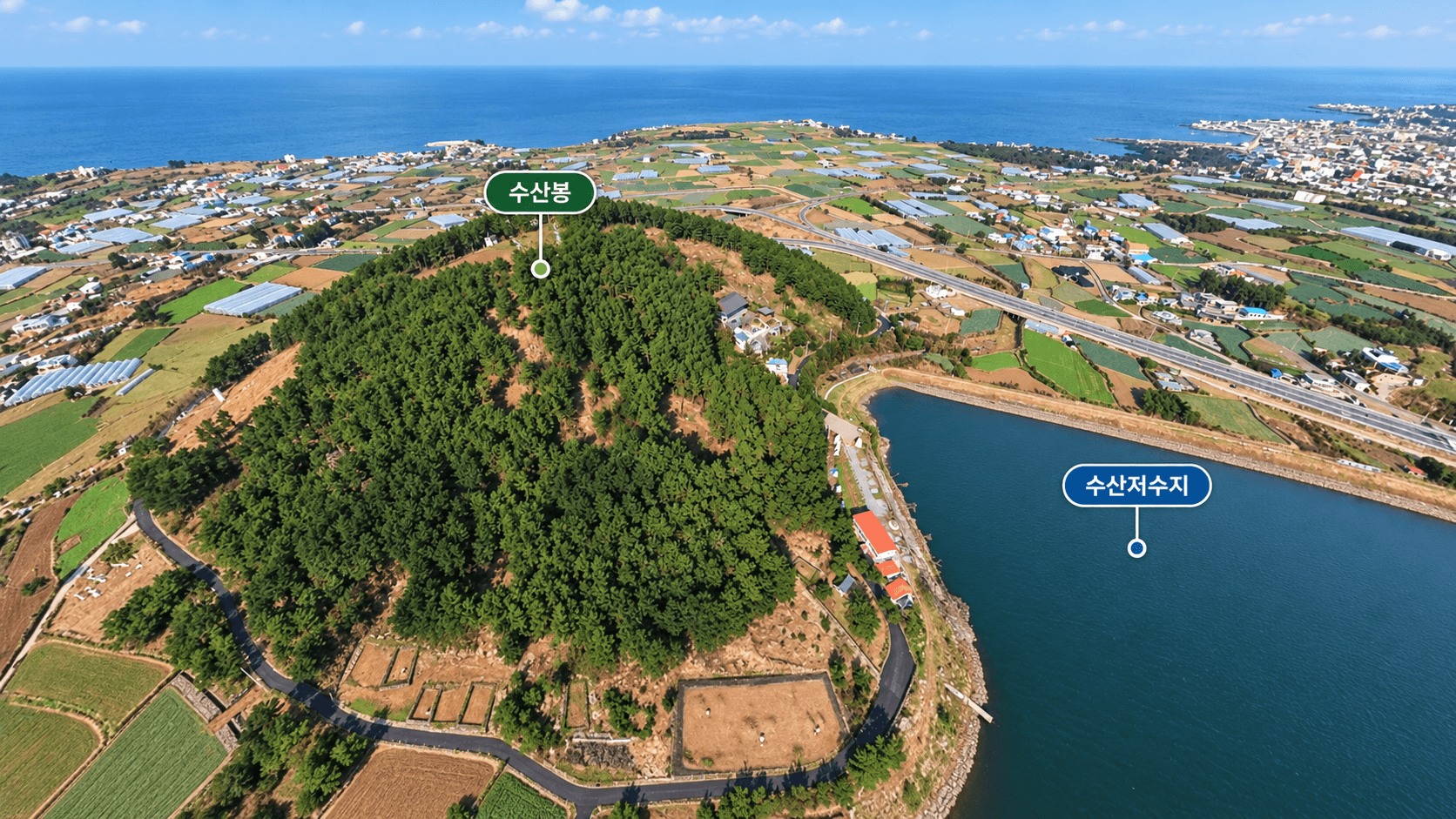 Aewol, Jeju
Susanbong, a low oreum in Aewol with a pond inside the crater
An oreum (volcanic cone) in Susan-ri, Aewol-eup, Jeju-si. A round crater, a small pond at the summit, a pavilion and exercise equipment, and well-kept stairway paths. The climb takes about 20 minutes, or about 40 minutes if you look around more widely. Part of Jeju Olle Route 16, open year-round.
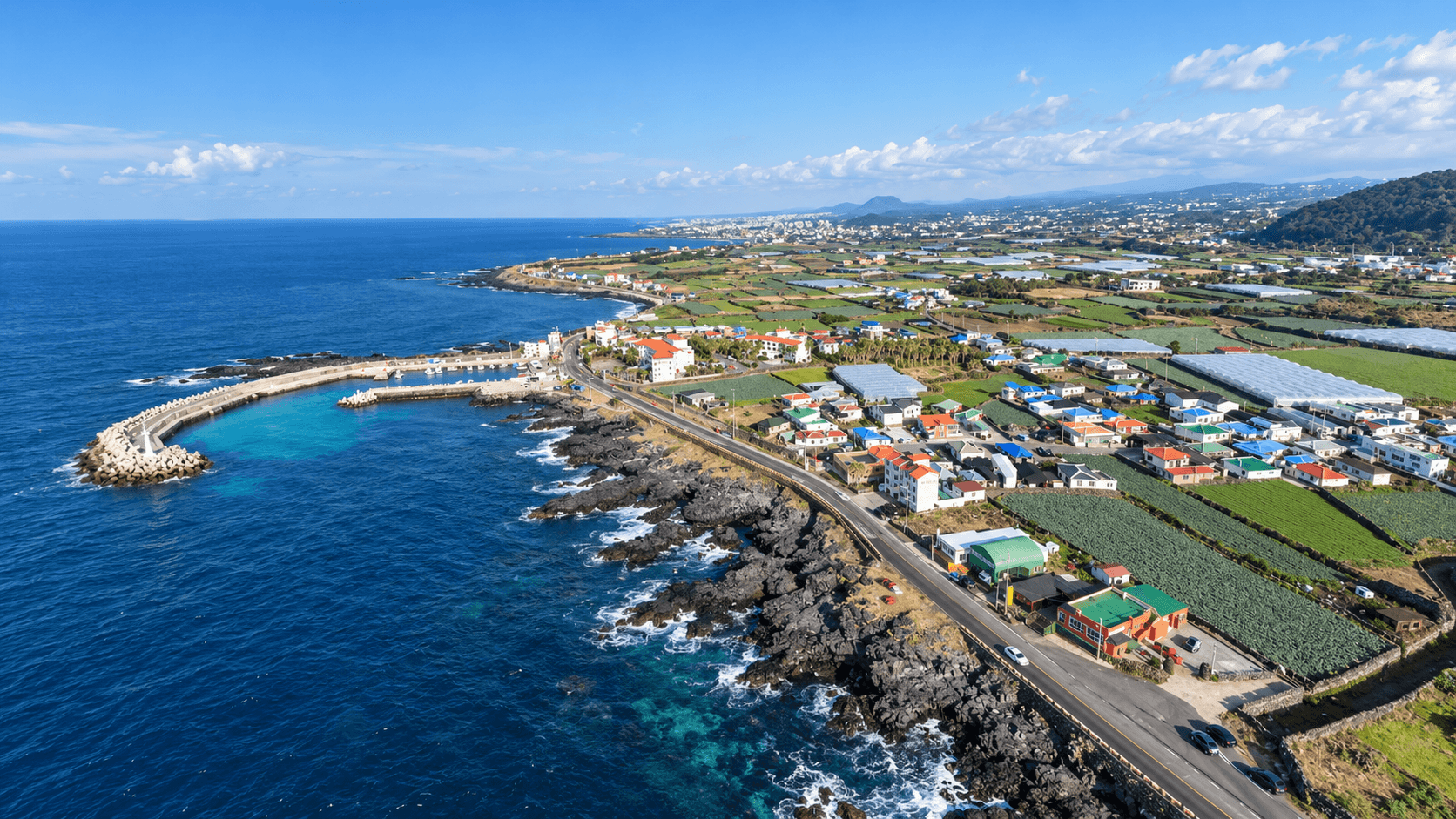 Aewol, Jeju
Gueom-ri Stone Salt Field, an Aewol Shore Where Salt Was Made on Basalt
Sogeumbille, the broad basalt shelf lying along the shore at Gueom Port in Aewol-eup. The way salt was made by banking clay walls and drying seawater, how the place looks now, and the Eomjang Coastal Trail running from Gueom-ri to Gonae-ri.
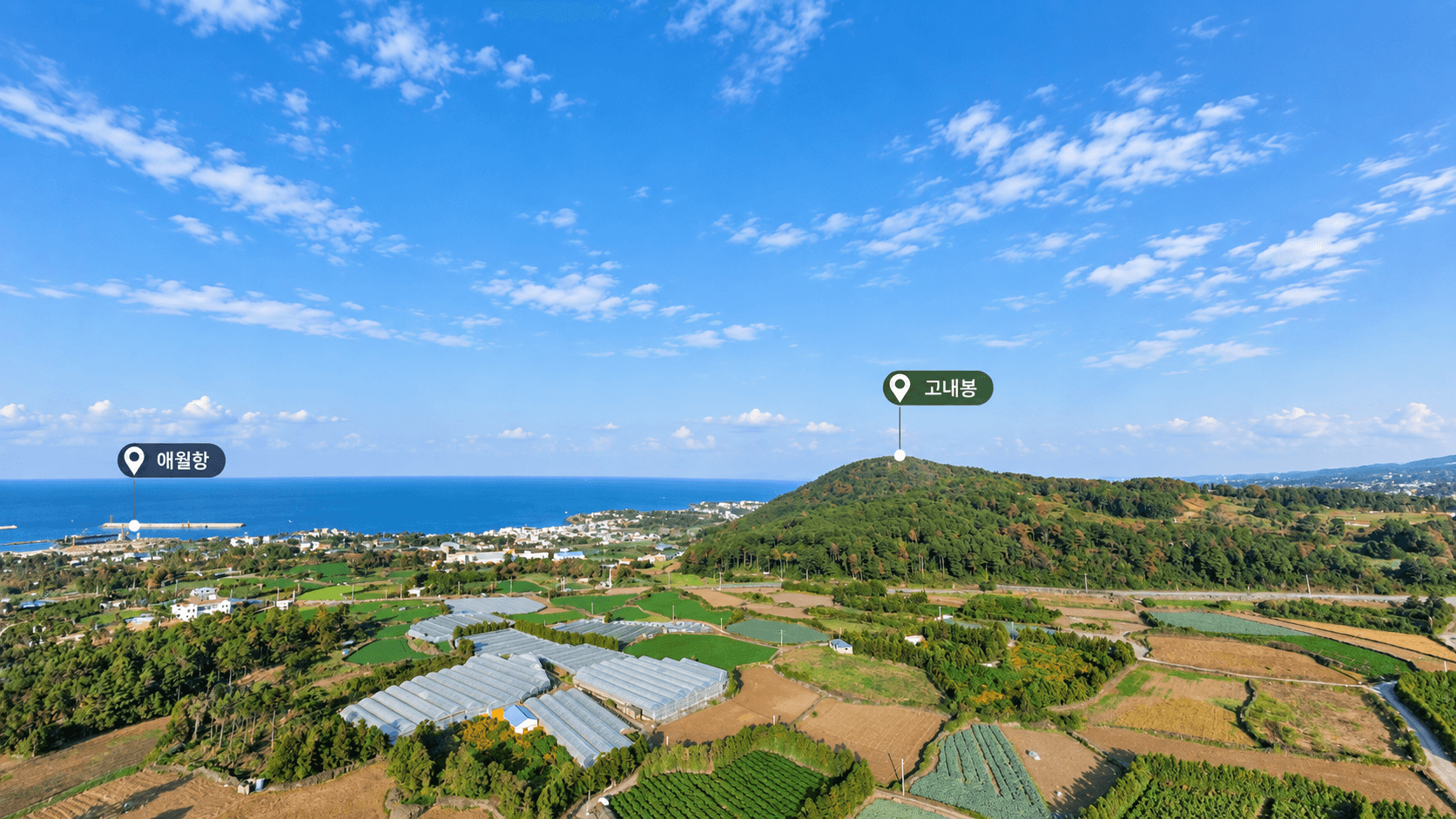 Aewol, Jeju
Gonaebong, a Low Oreum in Gonaeri, Aewol, Where Beacon Fires Were Once Lit
An oreum 135m high in Gonaeri, Aewol-eup, Jeju-si. It is made up of five peaks — Mangoreum, Bangaeoreum, Jinoreum, Neobunoreum and Sangdwitoreum — and the summit has an observation deck and exercise facilities. A place where beacon fires were once lit.